• Special functions

    View:

    Font size:

  • Mobile version
  • Site map
TYPE YOUR SEARCH QUERY HERE

News

news

publications

04.12.2025

1094

President of Uzbekistan receives Russia’s delegation

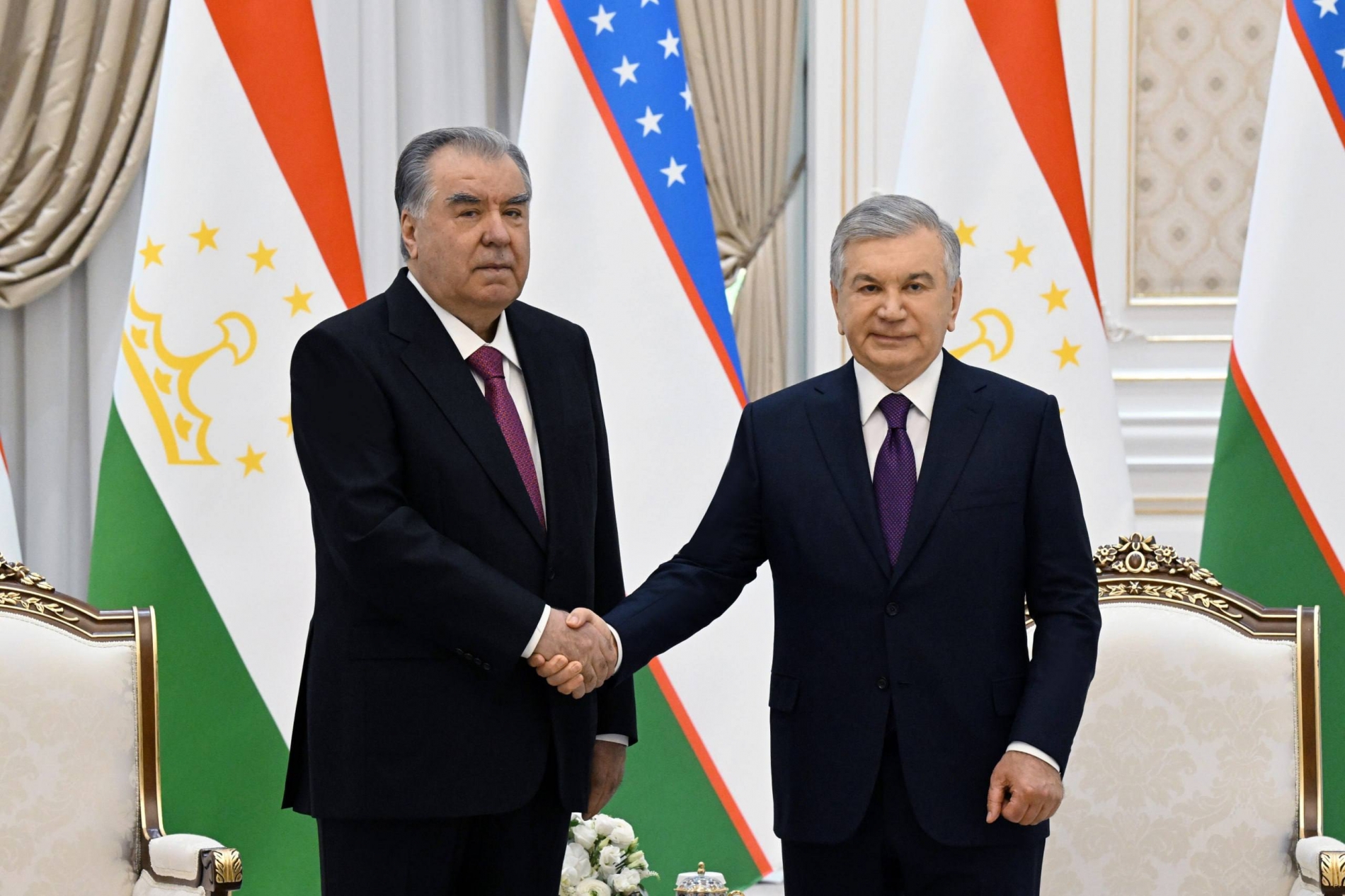
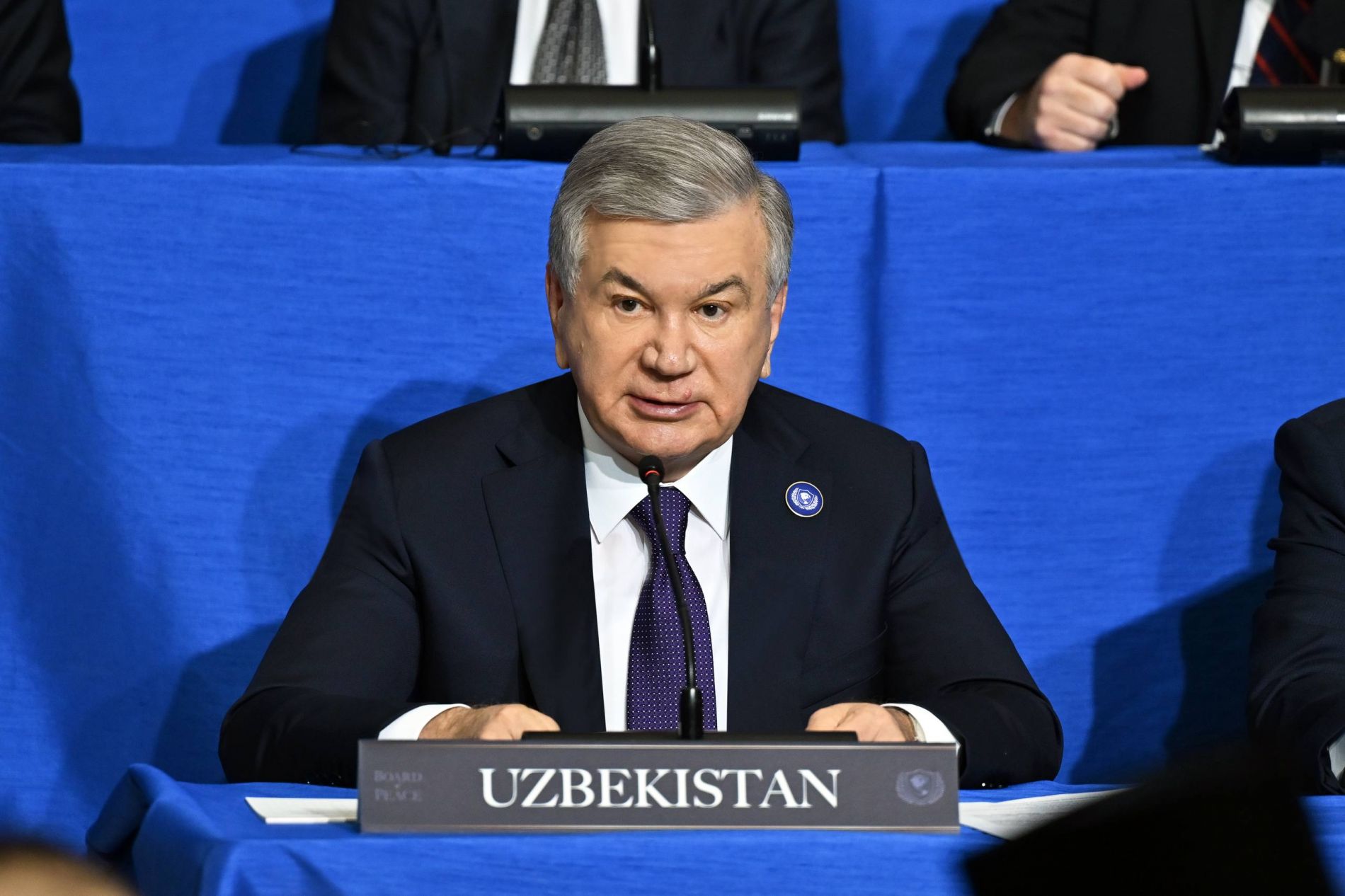
On December 3, President of the Republic of Uzbekistan Shavkat Mirziyoyev received a delegation of the Russian Federation led by the first deputy Prime Minister Denis Manturov, who arrived in our country to participate in the regular meeting of the Intergovernmental Commission.

The meeting was also attended by the heads of Russia's Nizhny Novgorod and Omsk regions, Bashkortostan, and Krasnoyarsk Kray.

At the beginning of the talks, the distinguished guest conveyed to the leader of our state the sincere greetings and best wishes of the President of the Russian Federation Vladimir Putin.

Issues concerning the practical implementation of agreements reached following high-level meetings, based on the "roadmap," were reviewed.

The steady growth in trade volumes and the implementation of projects in industry, energy, transport, metallurgy, chemistry, and other sectors were noted with satisfaction.

The importance was emphasized of taking coordinated measures aimed at maintaining the dynamics of trade turnover, accelerating cooperation projects in priority economic sectors, including within industrial zones, and continuing active contacts at the regional and business levels.

In this context, the fruitful outcomes of today's meeting of the Intergovernmental Commission and the business events in Tashkent were highly commended.

Moreover, on the sidelines of the meeting, the heads of leading Russian companies presented to the President of our country specific plans for implementing projects in the fields of IT, energy, electrical and mechanical engineering, chemicals, pharmaceuticals, textile and food industries.

news

publications

03.12.2025

1057

Presentation of the Book “Central Asia in World Politics” Held at the Diplomatic Academy

On December 2, 2025, the Diplomatic Academy under the University of World Economy and Diplomacy successfully hosted the presentation of the new monograph written by Dr. Rovshan Alimov, Doctor of Political Sciences, Professor, and Coгnselor to the Embassy of the Republic of Uzbekistan in the Islamic Republic of Pakistan, titled “Central Asia in World Politics.”


The event was attended by leading experts in international relations, representatives of the Oliy Majlis of the Republic of Uzbekistan, the Institute for Strategic and Interregional Studies under the President of Uzbekistan, the International Institute for Central Asia, the Center for Foreign Policy Studies under the Ministry of Foreign Affairs of Uzbekistan, Tashkent State University of Oriental Studies, diplomats, research staff, faculty members, as well as students and graduate students of UWED and the Diplomatic Academy.


The new research outlines conceptual approaches to analyzing the role of Central Asia in the system of world politics and the prospects for its futher development. Participants discussed the key ideas of the book, issues of regional security, geopolitical trends, and current challenges facing the Central Asian region.


As highlighted during the presentation, the monograph will serve as an important scholarly resource for specialists, researchers, and practitioners in the field of international relations.

news

publications

19.11.2025

980

THE SEVENTH CONSULTATIVE MEETING OF CENTRAL ASIAN LEADERS: A NEW STAGE OF INTEGRATION AND STRATEGIC DIRECTIONS FOR THE REGION

On 15-16 November 2025, Tashkent hosted the Seventh Consultative Meeting of the Heads of State of Central Asia, marking a new stage in the history of the region. The meeting was opened by the President of Uzbekistan, Shavkat Mirziyoyev, and was attended by the leaders of Kazakhstan, Kyrgyzstan, Tajikistan, Turkmenistan, as well as the President of Azerbaijan as a guest. The final communiqué announced the decision on Azerbaijan’s full accession to the Consultative Meeting format as a full-fledged member. This decision has opened up new opportunities for geo-economic and strategic cooperation along the Central Asia–Caspian–Caucasus axis.

On the eve of the summit, President Shavkat Mirziyoyev published an article titled “Central Asia on the Verge of a New Era,” in which he outlined clear ideas regarding a development model based on shared regional interests, a joint approach to address security challenges, and the necessity of deepening integration processes. The strategic principles reflected in the President’s article - stability, harmony, openness, and mutually beneficial integration - formed the foundation of the summit’s political agenda.

One of the key initiatives of the Tashkent summit was the proposal to set up for the “Community of Central Asian” format. This model envisions the establishment of an institutional basis for regional cooperation and the transformation of the Consultative Meetings into a structure with a permanent operational mechanism. The creation of such an institution is expected to contribute to the formation of a new, institutionalized framework for cooperation in Central Asia.

Economic issues were central to the summit agenda. The President of Uzbekistan proposed the elaboration of a regional trade and economic programme until 2035. This programme includes tasks aimed at creating favourable conditions for the free movement of goods, services, and capital; establishing a unified investment space; harmonizing e-commerce infrastructure; and organizing joint industrial cooperation centres. These ideas are also presented in detail in the President’s aforementioned article, underscoring the strategic goal of shaping the region as a single market.

In the sphere of transport and logistics, agreements were reached on expanding cooperation along the International Trans-Caspian Corridor, the China-Kyrgyzstan-Uzbekistan railway line, as well as routes linking Turkey and Europe through Azerbaijan.

In our view, these initiatives have the potential to enhance Central Asia’s role as a significant actor on the global transit map.

The summit also devoted considerable attention to issues of water and climate security. The proposal to declare 2026-2036 as the “Decade of Practical Actions for the Rational Use of Water in Central Asia,” as well as the initiative to establish a regional centre of competence in water resource management in Tashkent, represent important steps toward ensuring the region’s environmental sustainability. These initiatives aim to provide sustainable solutions to transboundary water challenges and to develop strategies for climate change adaptation.

In the field of security, the adoption of the “Concept of Regional Security and Stability in Central Asia” and the 2026-2028 risk catalogue establishes a framework for assessing common regional threats based on a unified methodology. Coordinated measures were identified to counter key threats, including terrorism, extremism, cybersecurity, drug and human trafficking, migration, and water-climate challenges. This document is expected to play a crucial role in shaping an interconnected mechanism of cooperation on regional security issues.

In the sphere of cultural and scientific cooperation, the President proposed holding an annual international congress on spiritual heritage and education, as well as adopting a special the UN General Assembly resolution recognising the contribution of the region’s prominent scholars and intellectuals to the development of global knowledge. This initiative aims to shape the region not only as an economic or political entity, but also as a community that strengthens spiritual and scientific unity.

Overall, the Seventh Consultative Meeting in Tashkent outlined new strategic directions for the geopolitical, economic, and cultural development of Central Asia. Azerbaijan’s accession expanded the format and opened new opportunities for logistics, trade, and political cooperation in the region.

The practical implementation of these initiatives will enable Central Asia to become a stable, interconnected, and actively engaged strategic space within global geopolitical and geo-economic processes in the coming decades.

M.Mamajonova

Leading Specialist Information Resource Center

Diplomatic Academy under the University of World Economy and Diplomacy

hk lotto 4dsitus totodepo 5krupiahbetrupiahbetslot gacorrupiahbetberlin totoyantotogelrupiahbetrupiahbetrupiah betrupiahbetrupiahbetslot gacorrupiahbetrupiah betrupiah betrupiahbetrupiahbetrupiah betrupiahbetslot depo 5ktoto hkratu89ratu89rupiahbetrupiahbetslot gacorrupiahbetrupiahbetrupiahbetrupiahbetrupiah betrupiahbetrupiahbetrupiah betrupiahbetrupiahbethttps://shivaay.clinic/our-blog/rupiahbetrupiah betrupiahbetrupiah betrupiahbetrupiah bethttps://zoomagia.ru/contactsrupiahbetrupiah betrupiahbethttps://start-tech.ae/rupiahbetrupiahbetrupiah betrupiah betrupiahbetrupiah betrupiahbetrupiahbetrupiah betrupiahbethttps://rcekm.ihrd.ac.in/rupiahbetrupiah betrupiahbetrupiah betberlintotoberlintotoberlin totoraja slotraja slotrupiah betrupiahbetslot gacor malam inislot gacorwatitotoslot gacorslot hokislot gacorrupiahbetrupiah betrupiahbetslot 5kslot gacorsitus gacorberlintotositus totoberlintotorejekibetsitus hktoto hkdepo 5kslot gacorrupiahbetrejekibetladangtotorupiahbetrupiahbetsitus tototogelsitus togelsitus gacorrupiahbetrupiah bethttps://www.mcgopichand.org/galleryrupiahbethttps://nds.id/regex-youtube-mikrotik/rupiahbetrupiah betcasino onlinehttps://lvdiez.com.ar/https://www.hybridmlm.io/https://www.hybridmlm.io/blog/https://www.hybridmlm.io/contact-us/https://jpmgroup.co.in/jns-instruments-ltdsitus togelsitus tototogel onlinehk lottoslot gacortoto slotslot hokisitus totosumseltotositus totototo